Tuesday, 06 October 2026
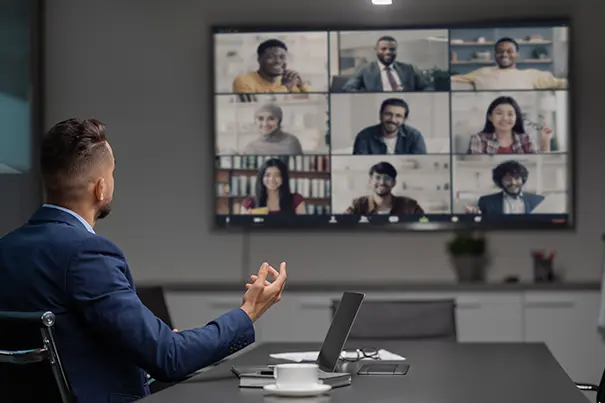
It is 8:52 for a 9:00 board call. The screen glows, but nobody at the table can tell which of three remotes actually controls the room. The video conferencing tile on the wall panel is not the platform leadership uses every day. Someone is already on the phone with IT. The meeting starts nine minutes late, with an apology instead of an agenda.
It is a familiar scene to almost every IT manager and facilities head who has walked into a “state-of-the-art” boardroom and found themselves fighting it. The technology is rarely broken. The room was simply built around the equipment, not around the people who have to use it, unaided, every single day.
At Communication Media Products Pvt Ltd (CMPPL), that is the trade-off we built our business around refusing to accept.
A Philosophy, Not a Slogan
Long before it appeared on a website, the idea that technology should not complicate communication — it should enable it — was the operating principle behind every room CMPPL has designed since 1995. Founder and CEO Sanjeev Kalhan, an electrical engineer from IIT Delhi with an MBA from IIM Calcutta, built the company on a simple conviction: the value of an AV system isn’t measured by how advanced its components are, but by how invisible it becomes to the person using it.
Thirty years and 800+ projects later, that conviction has a name inside CMPPL: technology should adapt to people — not the other way around.

The Bridge, Not the Wall
CMPPL’s own website carries the line “the bridge between people and innovation.” It is easy to read that as a tagline. We think of it as a design brief.
A bridge connects two things that would otherwise drift apart. On one side sits the way people actually work — their habits, their preferred platforms, their patience for friction on a Monday morning. On the other side sits the pace of innovation — new conferencing platforms, AI-enabled cameras, cloud-managed rooms, automation that used to sound futuristic and is now expected. Left alone, those two sides move further apart every year. A bridge is what keeps them connected, so that innovation reaches people without asking them to change how they work in order to receive it.
CMPPL has rebuilt itself more than once to stay that bridge — from a Xerox distribution partnership in 1995, into projector and display technology through the early 2000s, into full system integration from 2007 onward, and into AI-enabled, automation-first collaboration ecosystems today. The technology CMPPL sells has changed completely. The reason it changes has not: so the person walking into the room still only has to do one thing — press a single button and start talking.
What “Adapting to People” Actually Looks Like
In practice, a people-first AV system is recognisable by what it doesn’t ask of the user.
- It doesn’t ask people to learn a new interface for the sake of a new room. Whether an organisation standardises on Microsoft Teams, Zoom, Google Meet or Webex, the room should look and behave like the platform people already use — the argument at the centre of our guide to choosing between Teams, Zoom, Meet and Webex.
- It doesn’t ask people to understand signal routing before they can share a screen. The path between laptop, switcher, DSP, codec and display should be engineered once, correctly, and then disappear — as we set out in our guide to AV signal flow for IT managers.
- It doesn’t ask people to lean in, repeat themselves, or raise their voice because a glass-and-concrete room was never acoustically treated — a gap we unpack in our conference room acoustics guide.
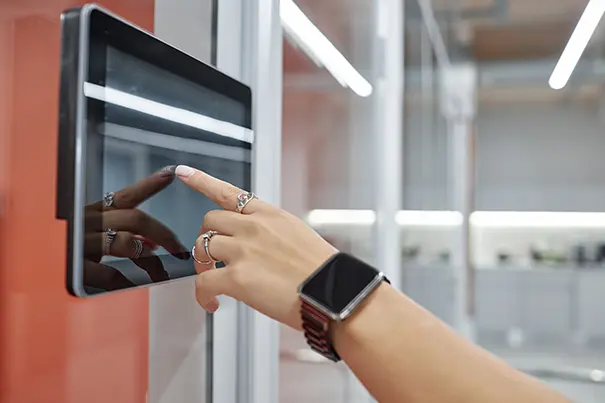
- It doesn’t ask a facilities team to relearn the system every time a platform updates. Automation, scheduling panels and remote monitoring should absorb that change quietly, in the background, long after installation.
The Same Philosophy, Every Room Type
The brief changes with every project — an executive boardroom, a training classroom, a 500-seat auditorium, a 24x7 command centre, a hybrid huddle space. The objective behind the design never does.
- Boardrooms and conference rooms: designing a 12-seater boardroom is as much about how quickly a decision-maker can start a call as it is about the hardware inside it — see also One Room. Five Technologies. One Experience.
- Hybrid collaboration and huddle rooms: remote and in-room participants need an equal seat at the table, which is the standard our hybrid conference room integration guide is built around.
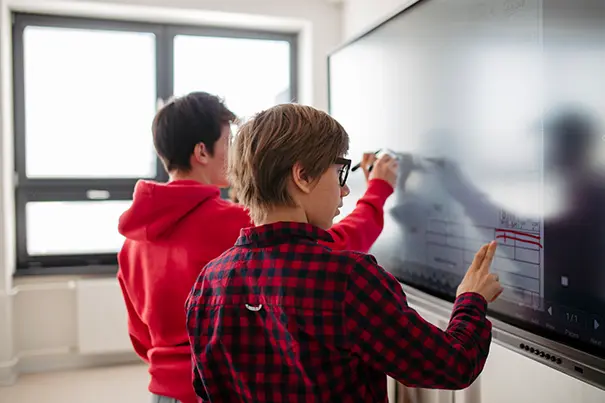
- Smart classrooms and training environments: an intelligent building AV design makes a classroom a place where ideas flow and learning happens, with the technology adapting to how people actually learn, not the other way round.
- Auditoriums, command centres and mission-critical monitoring: even at scale, auditorium AV solutions and real-time situational awareness have to remain intuitive under pressure, not just impressive on a spec sheet.
Whatever the room, three outcomes stay constant: make communication easier, make collaboration feel natural, and make the technology itself disappear into the experience.
A Process Built to Keep People at the Centre
Philosophy only matters if it survives contact with a real project. CMPPL’s design methodology is structured in five stages precisely so that the person who will use the room is never an afterthought:
- Discovery & requirement analysis — understanding business workflows and communication needs before any technology is chosen, part of our pre-sales analysis and solution design process.
- Solution architecture & technology planning — platform selection, acoustic design and control-system design matched to how the room will actually be used.
- Integration & implementation — hardware installation, system programming and and integration with enterprise IT infrastructure.
- Testing, calibration & optimisation — system validation and, critically, user-experience testing before handover.
- Training & lifecycle support — operational handover, then ongoing managed services and onsite and offsite technical support
A Short Checklist for IT and Facilities Managers
Before the next AV RFP goes out, these are the questions worth asking any vendor — including CMPPL:
- Can a first-time user start a meeting without a training session or a laminated instruction card taped to the table?
- Does the room's interface mirror the collaboration platform your organisation has already standardised on?
- Was the acoustic design specific to this room's materials and dimensions, or generic across every room in the proposal?
- What happens when the platform updates — does the room need to be re-taught to users, or does it adapt automatically?
- Who is accountable after installation — is there a named lifecycle support plan, or does responsibility end at sign-off?
Proof Behind the Philosophy
CMPPL was founded in 1995 and has spent over 30 years turning its people-first philosophy into delivered AV projects across boardrooms, classrooms, auditoriums, command centres and hybrid collaboration environments. Its team supports organisations across India, with a presence in major business centres including Delhi-NCR, Mumbai, Bengaluru, Chennai, Hyderabad, Pune, Kolkata and Ahmedabad.. The measure we hold ourselves to hasn’t changed since day one: not how advanced a room looks in a proposal, but how naturally people use it once we’ve left.
If your next boardroom, classroom, auditorium, command centre or hybrid space needs to work for the people using it — not the other way around — talk to the CMPPL team about what a people-first design process looks like for your organisation.
ABOUT THE AUTHOR
Sanjeev Kalhan, Founder & CEO, CMPPL
Sanjeev Kalhan is the Founder & CEO of CMPPL, with over 30 years in AV, computing and technology leadership. He founded CMPPL in 1995 and holds a B.Tech in Electrical Engineering from IIT Delhi and an MBA from IIM Calcutta.
Connect with him on LinkedIn: https://www.linkedin.com/in/sanjeevkalhan/
FAQ
It means an AV system is designed around existing habits, workflows and the platforms people already use, rather than requiring people to learn new behaviour to operate the room. In practice this shows up as one-touch meeting starts, interfaces that mirror familiar platforms, and automation that absorbs change instead of requiring retraining.
Most complexity comes from rooms designed around hardware capability rather than daily use — multiple remotes, mismatched interfaces, or signal chains that were never engineered as a single system. The system works in a demo but creates friction for the people who use it every day.
Through a five-stage process — discovery and requirement analysis, solution architecture and technology planning, integration and implementation, testing and optimisation, and training with lifecycle support — that keeps the end user's daily workflow as the design constraint at every stage, not just at handover.
Not inherently. The cost difference comes from the discovery and testing phases — understanding the room and the users before specifying hardware — rather than from more expensive equipment. Many people-first designs reduce long-term cost by lowering support tickets and re-training needs.
The room type changes the technology involved, but not the objective: make communication easier, make collaboration feel natural, and make the technology disappear into the experience, whether that's a 12-seater boardroom, a hybrid classroom, a 500-seat auditorium, or a 24x7 command centre.
Whether a first-time user can start a meeting unaided, whether the interface mirrors the organisation's standard platform, whether acoustic design was specific to the room, how the system handles platform updates, and who is accountable for support after installation.
The tagline describes the same idea from a different angle: CMPPL's role is to connect people's existing habits and workflows with the pace of technology innovation, so that new capability reaches people without requiring them to change how they already work.
For any inquiries or to discuss your requirements, please feel free to contact CMPPL through our website at www.cmppl.com or by email at info@cmppl.com. Our team will be happy to assist you.
Published: 06 October 2026