Wednesday, 15 July 2026
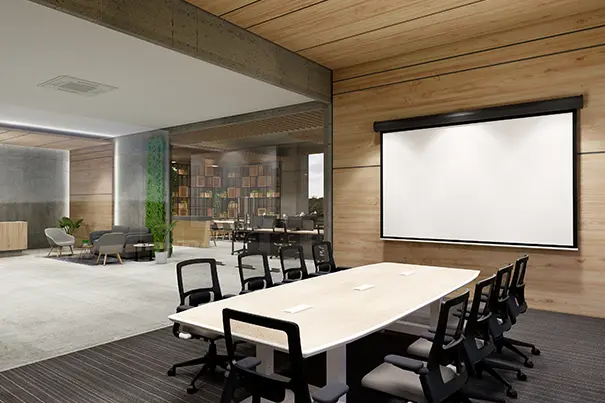
In today’s corporate environment, a conference room is more than just a physical space to gather; it is the vital communication hub bridging in-office teams with remote participants. However, even the most advanced video conferencing technology cannot overcome the fundamental laws of physics. If a room has poor acoustics, communication suffers. Implementing proper acoustic treatment for conference rooms is no longer a luxury—it is a critical component of modern office design. Without it, organizations face reduced speech intelligibility, compromised confidentiality, and increased meeting fatigue.
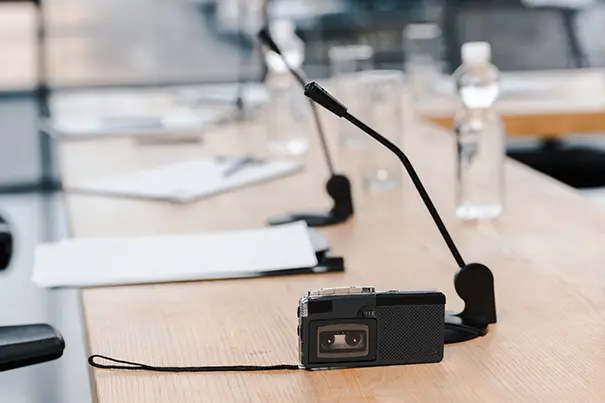
Why Conference Room Acoustics Matter The rise of unified communications, including Microsoft Teams Rooms and Zoom Rooms, has highlighted the importance of meeting room acoustics. In a hybrid meeting, microphones capture every sound in the room. If a space suffers from high reverberation, the microphone picks up a muddy, echoing audio signal, making it incredibly difficult for remote participants to understand the conversation. Proper acoustic design ensures that speech is crisp, background noise is minimized, and productivity remains high.
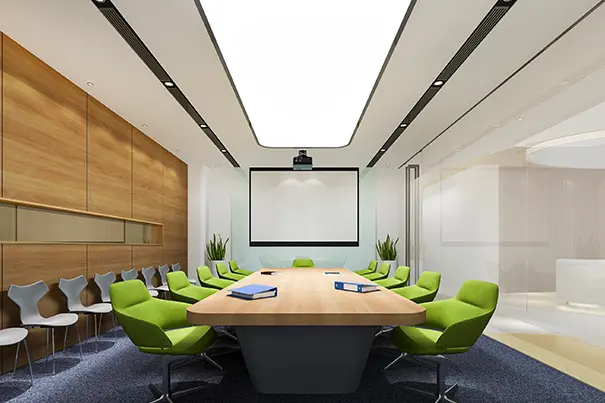
Common Acoustic Problems in Meeting Spaces Modern architectural trends heavily favor minimalism: exposed concrete, hardwood or LVT flooring, gypsum ceilings, and expansive glass walls. While visually striking, these hard reflective surfaces are an acoustic nightmare.
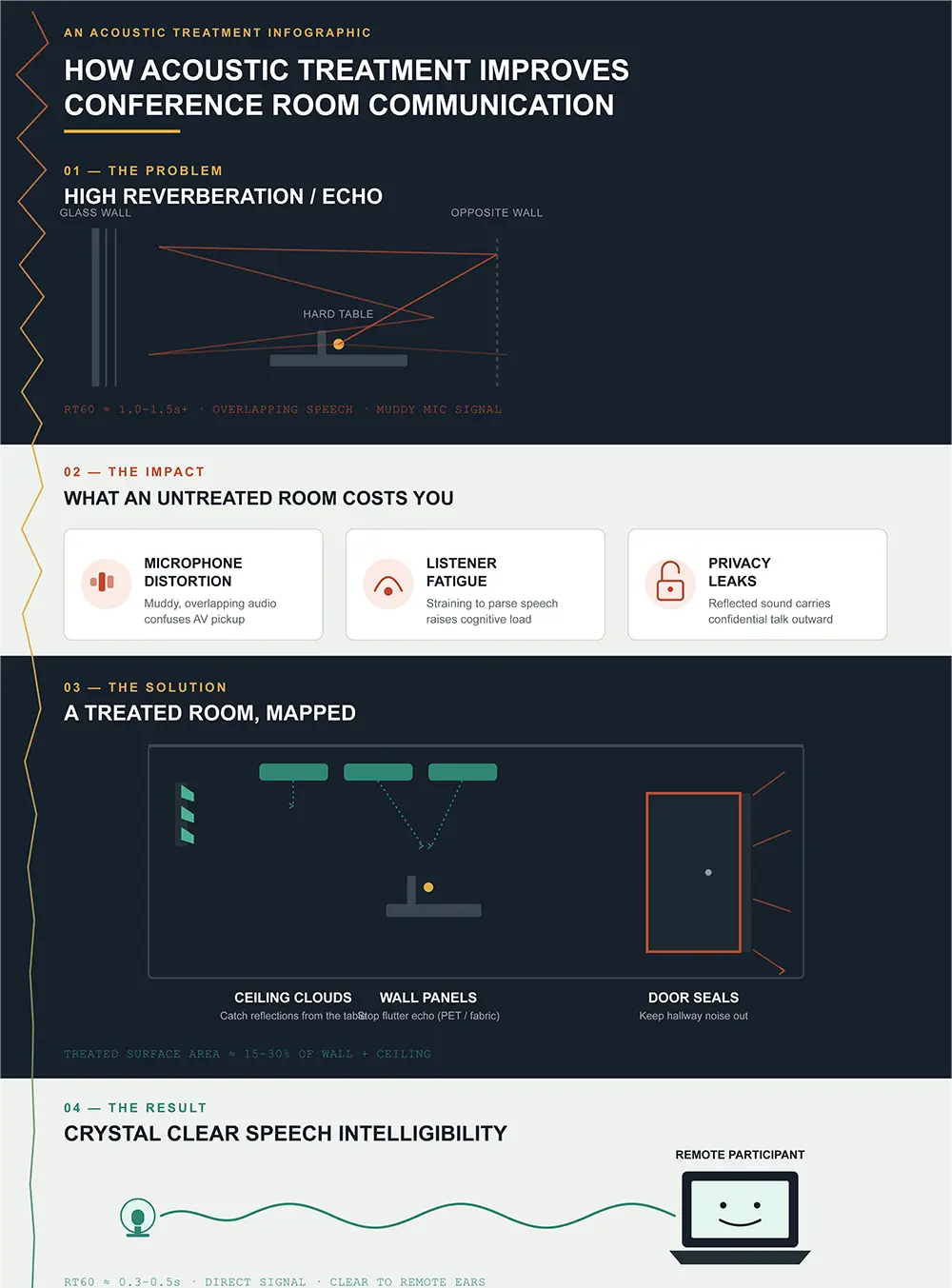
The Causes of Echo and High Reverberation Time When someone speaks in an untreated room, sound waves bounce off hard surfaces multiple times before decaying. The time it takes for this sound to fade is known as the reverberation time (RT60). In a typical conference room, a high reverberation time causes syllables to overlap, creating an echo that drastically reduces speech intelligibility.
The Glass Wall Dilemma Glass conference rooms are highly sought after for their natural light and transparency. However, glass is highly reflective to sound. Without appropriate wall panels or an acoustic ceiling to offset the glass, these rooms act as echo chambers, amplifying every voice, pen click, and chair scrape.
Soundproofing vs. Acoustic Treatment A frequent typical mistake in corporate AV solutions is confusing soundproofing with acoustic treatment. They serve entirely different purposes:
- Soundproofing (Sound Isolation): Prevents sound from entering or leaving a room. This addresses privacy concerns. It involves heavy, dense construction materials, specialized door sealing (like automatic drop seals), and high Sound Transmission Class (STC) partitions.
- Acoustic Treatment: Controls sound within the room. It involves using sound absorption materials to reduce echo and lower reverberation time. Do acoustic panels block sound? No, they absorb it to make the inside of the room sound better.
A successful conference room requires both: soundproofing for confidentiality and acoustic treatment for clarity.
Key Elements of Meeting Room Acoustic Treatment Achieving optimal interior acoustics requires a balanced approach, utilizing various surfaces within the space.
Ceiling Treatment The ceiling offers the largest uninterrupted surface area for sound absorption. An acoustic ceiling using high-NRC (Noise Reduction Coefficient) tiles is a standard approach. For open-plenum or exposed-deck ceilings, suspending acoustic clouds or acoustic baffles directly above the conference table captures sound waves close to the source before they can reflect around the room.
Wall Treatment Strategic placement of wall panels prevents "flutter echo"—the ringing sound that occurs between parallel hard walls. There are several aesthetic and functional choices:
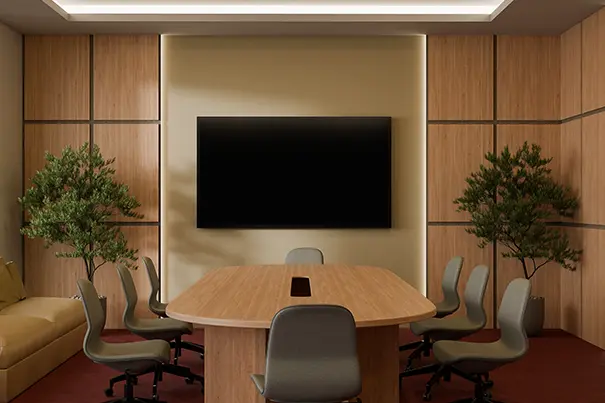
- Fabric Panels: The traditional choice, featuring high-density fiberglass or mineral wool wrapped in acoustically transparent fabric.
- PET Acoustic Panels: Made from recycled polyester, these are highly durable, environmentally friendly, and can be precision-cut into custom shapes and patterns.
- Wood Acoustic Panels: Slatted wood panels with an acoustic backing offer premium sound absorption while adding warmth and architectural elegance to boardrooms.
Flooring and Furniture Considerations While carpet provides some high-frequency absorption, it is rarely enough to treat a room entirely. Furniture also contributes; plush seating absorbs more sound than hard plastic or leather chairs. However, these elements should supplement, not replace, dedicated acoustic solutions.
Addressing HVAC Noise and Door Sealing Speech intelligibility is not just about reducing echo; it is also about lowering the background noise floor. HVAC noise from aggressive air conditioning vents can mask consonants in human speech. Upgrading to low-velocity diffusers or adding silencers to ductwork is often necessary. Furthermore, adding heavy acoustic sealing to doors ensures hallway noise stays out, and confidential executive discussions stay in.
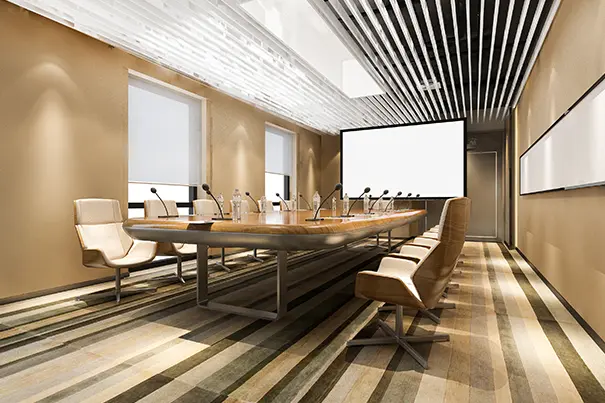
Acoustic Design: Planning vs. Retrofitting The most cost-effective time to address building acoustics is during the initial office planning phase. Incorporating acoustic modeling allows architects and AV integrators to predict reverberation times and integrate treatments seamlessly. However, retrofitting existing conference rooms is highly common. The key to a successful retrofit is strategically placing absorption where it matters most—typically at ear level on adjacent walls and directly above the meeting table—without disrupting existing lighting, fire sprinklers, or AV hardware.
Acoustic treatment is only one part of designing an effective hybrid meeting space. For organisations planning Microsoft Teams Rooms in Indian boardrooms, room layout, microphone placement, camera coverage, display positioning, and network readiness must also work together. Read our guide to designing future-ready Microsoft Teams Rooms for Indian boardrooms for more planning considerations.
The ROI of Proper Acoustics Investing in office acoustic solutions yields a tangible Return on Investment (ROI). Proper acoustics reduce the cognitive load on employees, preventing the "listening fatigue" associated with straining to hear through echo. For video conferencing and hybrid meetings, clear audio projects professionalism to clients and partners. Ultimately, a well-treated room is utilized more frequently and effectively by the team. Integrating professional AV solutions with deliberate acoustic design transforms a standard meeting room into a high-performance collaboration environment.
Why Professional Acoustic Design Matters

- When it comes to corporate acoustics, guesswork leads to wasted budgets and unresolved problems. Professional acoustic design matters because it relies on physics, data, and specialized engineering.
- Precise Measurements: Professionals use calibrated microphones and software to measure the exact RT60 (reverberation time) and frequency response of a room before recommending solutions.
- Acoustic Modelling: Advanced software predicts how different materials will interact with sound in a specific architectural layout, ensuring you only buy what you need.
- Material Selection: Not all acoustic panels are created equal. Professionals match the absorption coefficients of materials (PET, fiberglass, wood) to the specific problem frequencies in the room.
- Integration with AV Systems: Microphones and speakers have specific pickup and dispersion patterns. Acoustic consultants ensure treatment is placed to maximize the performance of beamforming microphones and line-array speakers.
- Compliance: Professional designs ensure adherence to modern workplace standards for speech privacy and ambient noise levels, prioritizing both form and function.
For additional guidance on identifying the causes of poor room audio, see our guide to diagnosing meeting-room audio problems.
ABOUT THE AUTHOR
Sanjeev Kalhan is the Founder & CEO of CMPPL, with over 30 years in AV, computing and technology leadership. He founded CMPPL in 1995 and holds a B.Tech in Electrical Engineering from IIT Delhi and an MBA from IIM Calcutta. Connect with him on LinkedIn.
FAQ
A. Acoustic treatment involves adding sound-absorbing or sound-diffusing materials to a room (like wall panels or ceiling clouds) to control echo, reduce reverberation, and improve overall audio clarity.
A. Soundproofing blocks noise from entering or leaving a room to ensure privacy, usually requiring heavy construction and sealing. Acoustic treatment controls the sound inside the room to make speech clearer.
A. Echoes are caused by sound waves reflecting off hard, parallel surfaces like glass walls, drywall, hard floors, and solid tables. Because sound travels much faster than we speak, these reflections cause audio to overlap and sound muddy.
A. This depends on the room's dimensions, existing materials, and ceiling height. A general rule for conference rooms is to cover 15% to 30% of the available wall and ceiling surface area with absorptive material.
A. Yes. While you cannot put panels on the glass itself, you can heavily treat the ceiling (using baffles or clouds), the floor (thick carpeting), and any solid adjacent walls to compensate for the reflective glass.
A. For spaces heavily utilized for video conferencing and speech, the ideal RT60 is typically between 0.3 and 0.5 seconds.
A. No, acoustic panels are designed to absorb sound within the room, not block it. While they reduce the overall volume in the room slightly, they will not stop conversations from being heard in the hallway.
A. High-density fiberglass wrapped in fabric offers excellent broadband absorption. PET (polyester) panels are great for modern aesthetics and durability, while wood-slat panels with acoustic backing provide a premium look with solid mid-frequency absorption.
A. Absolutely. Surface-mounted fabric panels, suspended ceiling clouds, and peel-and-stick PET tiles can be easily integrated into existing rooms without major construction or downtime.
A. Costs vary widely based on room size, material choice (e.g., standard PET vs. premium wood), and installation complexity. A professional assessment can provide an accurate ROI-driven estimate tailored to your space.
Key Takeaways
- Acoustic treatment improves speech clarity and reduces echo inside a room, whereas soundproofing prevents sound from leaking in or out.
- Hard surfaces like glass walls, concrete, and hardwood floors are the primary causes of poor acoustics and high reverberation times in modern offices.
- Poor conference room acoustics severely degrade the audio quality of hybrid meetings on platforms like Microsoft Teams and Zoom.
- The ideal reverberation time (RT60) for a video conferencing room is between 0.3 and 0.5 seconds.
- Effective acoustic design addresses multiple surfaces, utilizing ceiling treatments (clouds, baffles) and wall treatments (fabric, PET, or wood panels).
- HVAC noise floors must be minimized, as loud air conditioning can mask human speech and disrupt microphone performance.
- Glass conference rooms require intensive ceiling and adjacent-wall acoustic absorption to counteract the highly reflective nature of glass.
- Acoustic panels do not block sound for privacy; achieving privacy requires high STC-rated partitions and proper door sealing.
- Retrofitting acoustic treatment is common and can be done aesthetically without disrupting existing architecture.
- Professional acoustic modeling ensures the right materials are placed in the right locations to optimize integrated AV technology.
Ready to eliminate echo and upgrade your meeting experience? Don't let poor acoustics undermine your technology investments and team productivity. At Communication Media Products (India) Private Limited (CMPPL), our experts specialize in bridging the gap between high-end AV integration and precise acoustic design. Whether you are planning a new corporate facility or need to retrofit an existing boardroom, we provide tailored, data-driven acoustic solutions. Contact our team today to schedule a comprehensive acoustic assessment for your conference rooms.
For any inquiries or to discuss your requirements, please feel free to contact CMPPL through our website at www.cmppl.com or by email at info@cmppl.com. Our team will be happy to assist you.