Saturday, 14 September 2026
How CMPPL engineers meeting outcomes, not just meeting rooms
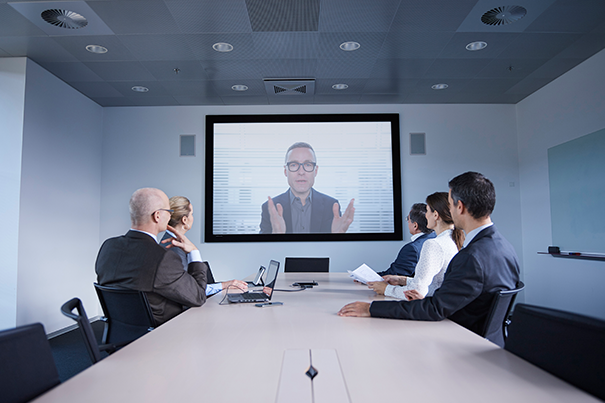
Picture the boardroom your company just refreshed. 4K PTZ cameras that track the speaker. A ceiling microphone array rated for pin-drop clarity. A 98-inch display sharp enough to read a spreadsheet from the back row. On paper, it's a flagship room.
In practice, the meeting starts nine minutes late while someone hunts for the right cable. The person at the far end of the table sounds like they're calling from inside a tin can. The "one-touch join" panel needs three touches, a reboot, and a call to IT. Everyone in the room has quietly agreed to just use their laptop speaker instead.
This is the gap most enterprises fall into: they buy AV equipment, and then wonder why they didn't get an AV experience. Cameras, microphones, and displays are components. A meeting experience is what happens when those components are engineered to work together, tuned to the room, and matched to how people actually meet.
The Equipment Trap: Why Spec Sheets Don't Predict Good Meetings
It's an easy trap to fall into, because procurement naturally runs on spec sheets. Resolution, field of view, signal-to-noise ratio, throw distance — these numbers are comparable, measurable, and easy to put in a tender. Meeting experience isn't measurable in the same way until the room is already built and people are already frustrated by it.
But a spec sheet describes a component in isolation, not a component in a room. A ceiling microphone rated for excellent pickup can still leave dead zones if it's placed wrong for a rectangular table versus a boat-shaped one. A camera with class-leading autoframing can still crop out half the participants if its mounting height and lens angle weren't planned against the seating layout. As we've written elsewhere, an intelligent building is more than walls and hardware — it's the clarity of sound, the sharpness of visuals, and the ease of interaction that shape how people actually feel and perform inside it. The same principle applies at the scale of a single conference room.
What "Experience" Actually Means in a Conference Room
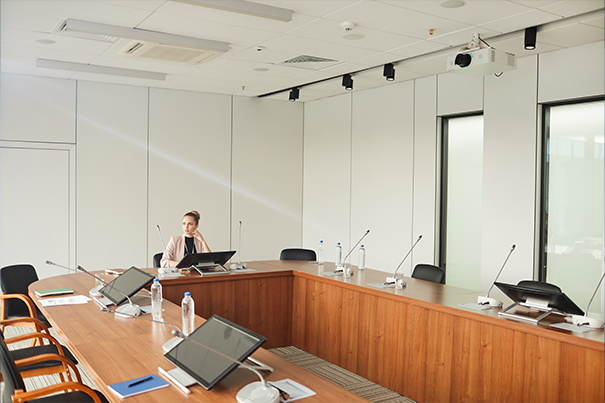
Strip away the marketing language, and a good AV experience comes down to a short list of things a meeting participant actually notices:
- Meetings start on time, because joining a call takes one touch, not three, and doesn't depend on remembering which input to select.
- Everyone can hear and be heard, with no echo, no dead zones, and no one leaning toward a microphone to be understood.
- Remote participants are full participants, framed clearly, audible clearly, and not an afterthought bolted onto an in-room conversation.
- The room behaves the same way every time, regardless of who's using it or which platform the meeting happens to be on.
- Nobody needs to call IT, because the system was designed for the least technical person in the building, not the most.
None of this shows up on a hardware spec sheet. It shows up in AV signal flow that's been planned end to end, in acoustic treatment calibrated to the specific room, and in control logic that a first-time user can operate without a manual.
Where Equipment-First Projects Break Down
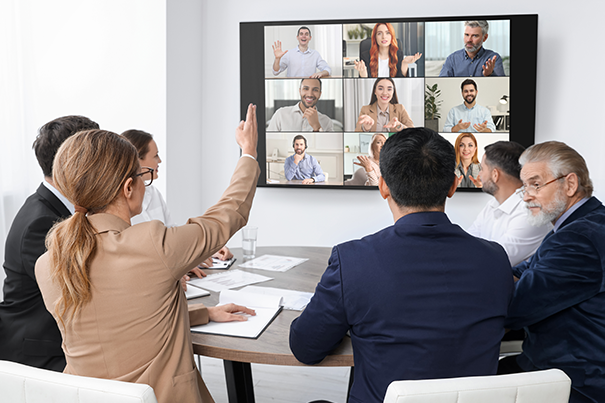
Most of the recurring support tickets IT managers deal with trace back to decisions made — or skipped — before a single cable was pulled:
- Microphone coverage chosen from a catalogue rather than modelled against the room's actual dimensions and seating.
- Camera framing and display placement decided independently of each other, so eye lines and sightlines never quite work.
- No documented signal chain, so troubleshooting a fault means guessing where in the chain it broke.
- Control interfaces designed for the installer's convenience, not the user's — solved properly only through structured user and operational training, , not a laminated cheat sheet left on the table.
- No lifecycle plan, so firmware drifts, certifications lapse, and a room that worked perfectly at handover degrades quietly over eighteen months.
Individually, each of these looks like a minor oversight. Together, they're the difference between a room that works and a room your finance team paid for twice — once to install it, and again in the productivity lost to broken meetings.
Engineering the Experience: How CMPPL Approaches Every Room
CMPPL has spent over three decades as a pan-India systems integrator built around one idea: the room isn't finished when the hardware is mounted, it's finished when the meeting works. That shows up as a consistent methodology across every project, starting with pre-sales analysis and solution design — understanding room geometry, user workflows, and collaboration platforms before recommending a single product.
From there, our system integration team designs and documents the full signal chain, specifies acoustic treatment for the room's actual dimensions, and commissions every room — whether it's a 12-seater boardroom or a multi-platform hybrid collaboration room — under real meeting conditions, not just a bench test. Whichever platform your organisation standardises on, we build and support it as a complete room experience, not a hardware drop.
That commitment doesn't end at handover. Every project includes structured end-user training and continues into managed services and post-sales technical support, onsite and offsite, so the experience your team gets on day one is the same experience they get eighteen months later.
A Quick Self-Audit for IT Managers
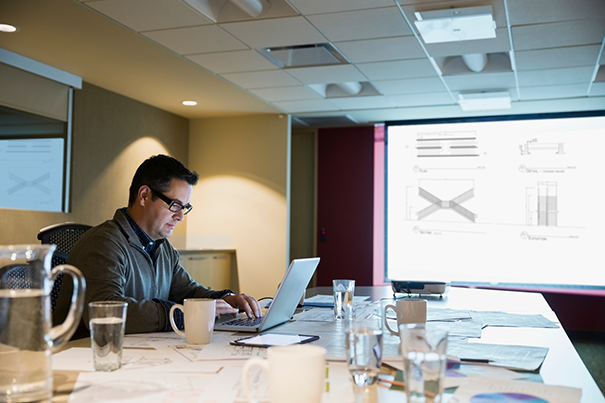
Before your next room refresh, it's worth auditing your current spaces against experience — not equipment. Ask:
- How many seconds does it take, on average, to actually start a call in this room?
- Are there seats at the table where the microphone consistently struggles to pick up the speaker?
- Do remote participants routinely ask people to repeat themselves?
- How many support tickets has this room generated in the last quarter — and for what?
- Could a new joiner run this room on their first day without help?
If the honest answers are uncomfortable, the problem usually isn't your hardware. It's that no one engineered how the hardware would come together as an experience.

The Room Nobody Notices Is the Room That Works
The best compliment a conference room can get is silence about it — no one mentions the AV because it simply worked, and the meeting was about the meeting, not the microphone. That's not an accident of good products. It's the result of a design process that treats the meeting experience as the actual deliverable, and the equipment as one of several tools used to build it.
If your organisation is weighing a room refresh or a new office build, it's worth asking any prospective partner not just what they'd install, but how they'd design for the experience around it. That's the question CMPPL builds every project to answer. Get in touch with our AV consultants to talk through your next room.
ABOUT THE AUTHOR
Sanjeev Kalhan, Founder & CEO, CMPPL
Sanjeev Kalhan is the Founder and CEO of Communication Media Products Pvt Ltd (CMPPL), a pan-India enterprise AV systems integrator he founded in 1995. A B.Tech graduate of IIT Delhi and an MBA from IIM Calcutta, Sanjeev has spent over three decades designing and delivering AV, video conferencing, and unified collaboration solutions for India's leading enterprises. He writes about the engineering and design decisions that separate AV equipment from AV experience.
LinkedIn: https://www.linkedin.com/in/sanjeevkalhan/
FAQ
AV equipment is the hardware in the room — cameras, microphones, displays, control panels. The AV experience is what happens when someone actually uses that hardware: does the meeting start on time, can remote participants hear and be heard, does the room behave the same way every single time? Equipment is a parts list. Experience is an outcome, and it depends on how those parts are specified, integrated, tuned, and supported together.
Because individual components can each meet their spec sheet and still fail as a system. A brilliant ceiling microphone array placed wrong for the room's shape leaves dead zones. A 4K camera with the wrong lens angle crops out half the table. A powerful DSP with default settings still produces echo. Good meetings depend on how components are matched to the room's acoustics, layout, and use case — not on any single product's rating.
CMPPL starts with pre-sales analysis and solution design before any hardware is chosen — mapping room geometry, acoustics, user workflows, and platform requirements first. From there, we design the signal chain, specify and tune the acoustic treatment, commission the room under real meeting conditions, train the end users, and stay on as a managed-services partner. Equipment selection is one step in that process, not the starting point.
Signal flow is the planned path a video or audio signal takes from source (a laptop, a microphone) to destination (a display, a speaker, the far end of a call), including every switch, DSP, and control point in between. When signal flow is documented and properly engineered, sources switch cleanly, audio stays in sync, and the room behaves predictably. When it's assembled ad hoc, you get the familiar symptoms — lag, dropped audio, screens that won't wake up, and support tickets.
It depends on room size and complexity, but the difference is usually weeks, not months. A well-scoped huddle room can be commissioned within about a week; a larger boardroom or multi-platform hybrid space typically takes 10–14 days once design is finalised. The extra time upfront goes into planning, acoustic tuning, and commissioning under real conditions — which is what prevents months of recurring support calls afterward.
In most projects, CMPPL retains and integrates whatever equipment is already performing well, and focuses investment on the specific gaps causing poor meetings — a microphone with dead zones, a control system that confuses users, or a signal chain with no documented design. A full rip-and-replace is rarely necessary or cost-effective.
That's the part equipment-only vendors typically skip. CMPPL provides user and operational training so teams are confident from day one, plus ongoing managed services and post-sales technical support, onsite and offsite, so firmware updates, platform changes, and everyday wear don't quietly erode the experience the room was designed to deliver.
For any inquiries or to discuss your requirements, please feel free to contact CMPPL through our website at www.cmppl.com or by email at info@cmppl.com. Our team will be happy to assist you.
Published: 14 September 2026